IDEA

Why IDEA?

For years, the market and government have been stuck in a standstill.
Service providers avoided using government data because it was unreliable, and governments continued producing low-quality data because providers weren’t using it anyway.

This feedback loop left data quality stagnant, despite multiple attempts and consistently mediocre results.
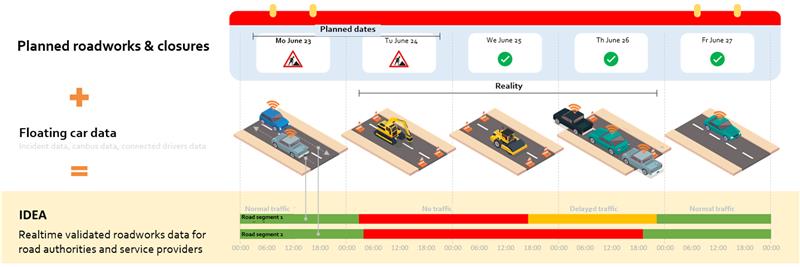
IDEA is designed to break this cycle and create a system where data is trustworthy, used, and continuously improved.

A data driven solution

How it works?

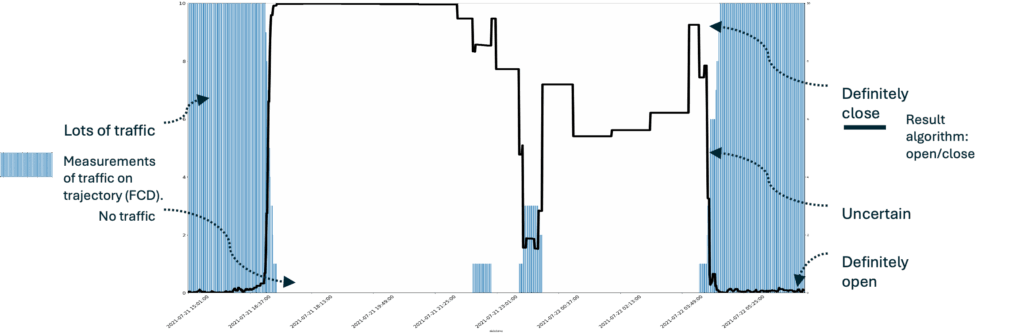
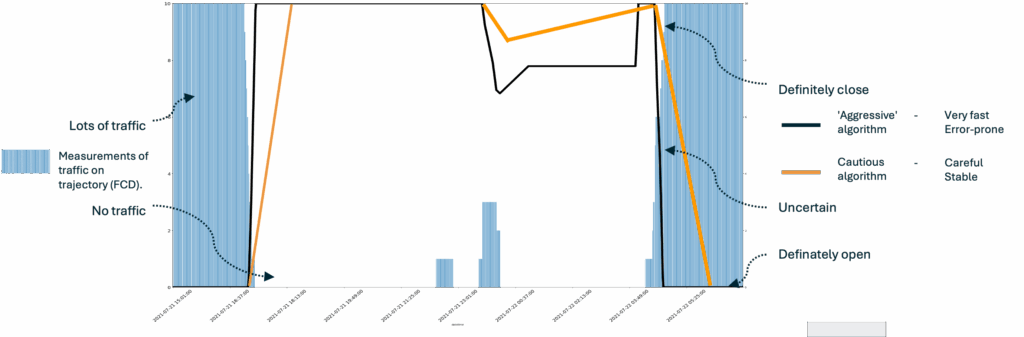
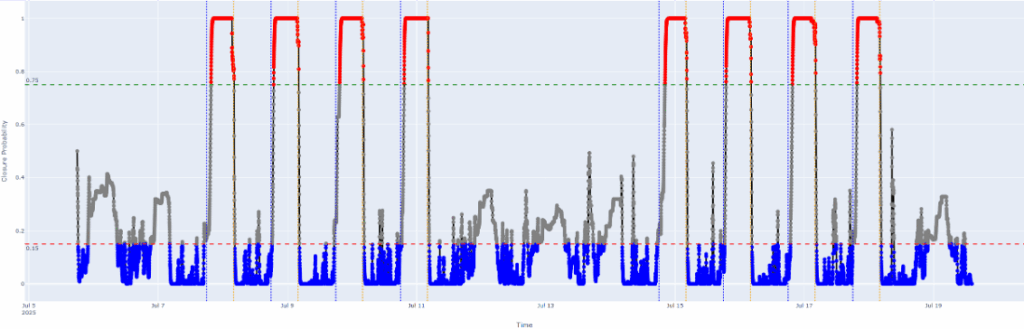
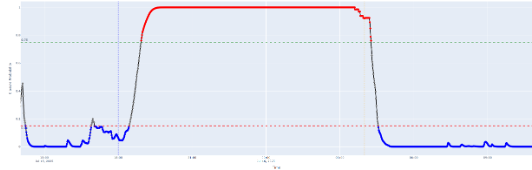
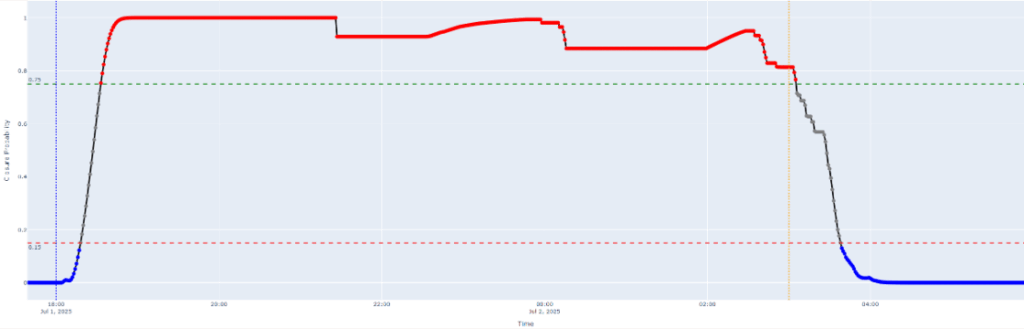
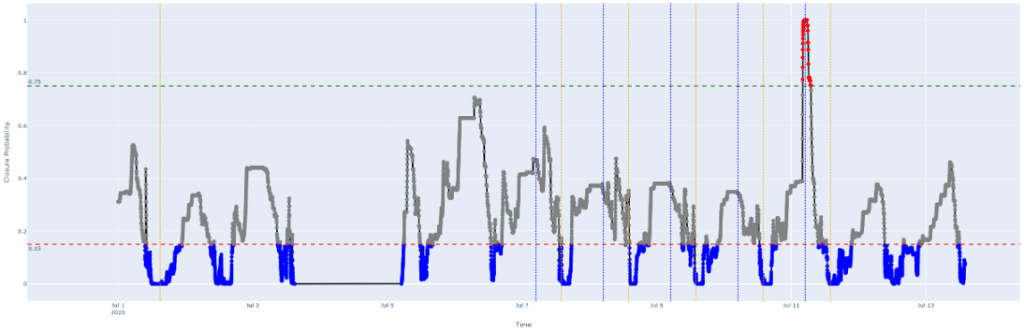
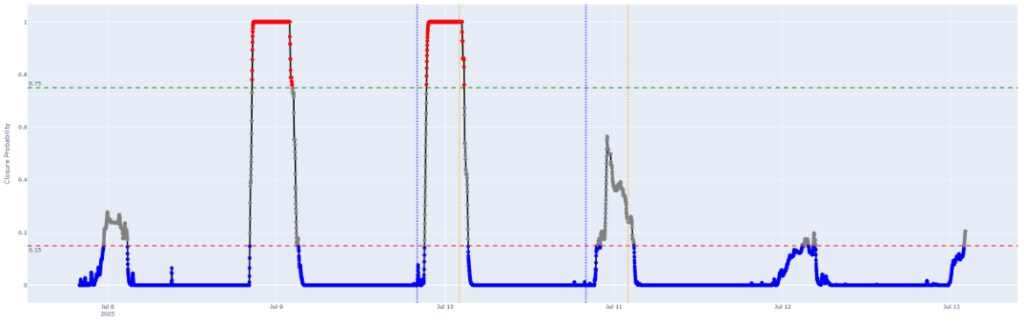
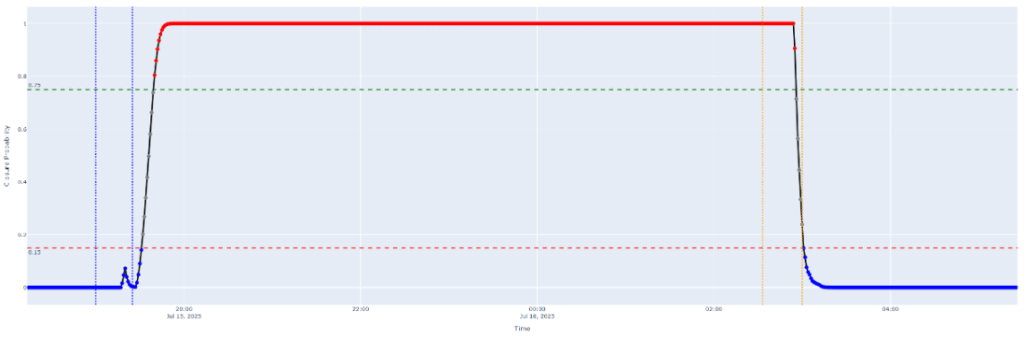
It detects potential road closures by comparing periods of zero vehicle activity to the location’s historical traffic patterns. When the duration without vehicle detections deviates significantly from what is normally expected, the system evaluates this anomaly and computes the probability that an active road closure is occurring.

Examples

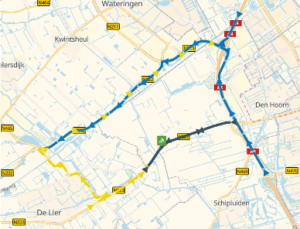
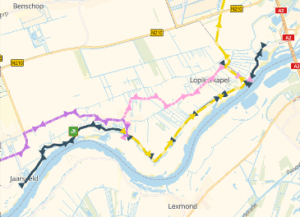
Multiple Closures

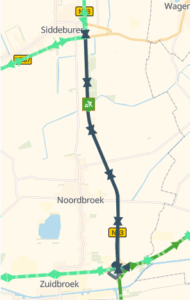
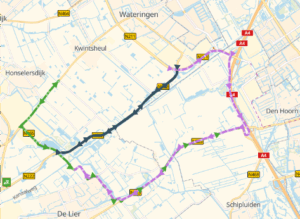
One Closure

Multiple trajectories with different dates, only one valid period found.

Different periods than mentioned in the planning.

Multiple start and end periods in planning

Outcomes

The solution delivers several key outcomes. It provides clear insight into whether roadworks are being carried out as planned and significantly improves the overall quality and reliability of road-work data. Road users gain access to real-time road-closure information through apps, while standardized data building blocks enable consistent integration across systems. In addition, the system generates new validation insights—such as incident detection and road blockages—supporting more accurate and responsive traffic management.

Challenges

The solution is still evolving, and several technical challenges remain. These include accurately handling different road types, incorporating future or planned roads, managing tunnels, refining geometric representations, and improving map-matching performance. As we address these issues, all enhancements will be added to the open-source repository to ensure transparency and shared progress. Even in its current state, however, the system already offers greater consistency and reliability than manual verification.

Are you ready to validate?

To determine readiness for validation, a set of project criteria was established, drawing on the Lordimas framework. These criteria assess three key dimensions: (Data) Governance, evaluating whether the appropriate contracts and agreements are in place; Data Management Requirements, ensuring that the dataset contains the necessary level of detail; and Technology, confirming that the minimum technical capabilities and infrastructure are available. Together, these elements provide a structured basis for determining whether an organization is prepared to proceed with validation.

Possible new validations

Possible new validations include leveraging crowd-sourced incident reports to enhance the accuracy of incident detection and enable more effective operational responses. Additionally, unwanted rerouting detection could be introduced to support traffic control centers in identifying and addressing irregular or unintended traffic patterns. These new validation mechanisms would further improve situational awareness and overall data reliability.